How to Dispose of Used Medical Tubing Safely?

Time:2026-09-08 Author:Sienna
0%

How to dispose of used medical tubing safely begins with one simple principle: treat it as potentially contaminated. Tubing may look harmless, yet blood, respiratory secretions, medication residue, or other fluids can remain inside. The correct method depends on where the tubing was used, what it contacted, and whether it includes a needle or sharp connector. If a sharp is attached, place it immediately into an approved sharps container. Never push it through a soft waste bag.

Dr. William A. Rutala, a respected infection prevention specialist, has emphasized, “The most important component of infection control is hand hygiene.” That reminder belongs beside every disposal procedure. Wear suitable gloves, keep the tubing away from clothing, and avoid squeezing or cutting it. Place contaminated tubing into a clearly labeled biohazard container or regulated medical-waste bag, following your facility’s written policy. Do not place it in household recycling. Do not assume that sealed tubing is clean.

For home users, instructions from the healthcare provider or local waste authority should guide the final step. Some communities require a designated collection site. Others provide approved containers for infectious waste. Close the container before it becomes overfilled, and wash your hands after removal. A tidy bag does not prove safe disposal. Mistakes happen, especially when tubing appears dry. If leakage, exposure, or uncertainty occurs, stop handling it and contact a qualified infection-control professional. The safest answer is sometimes less convenient, but guessing is worse.
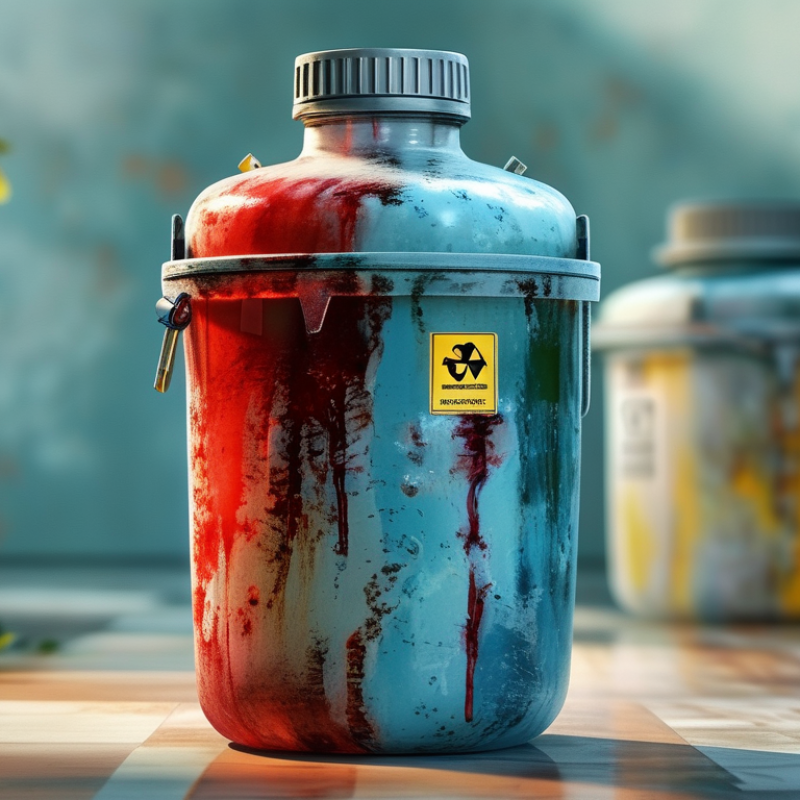
How to Dispose of Used Medical Tubing Safely?

Identify Tubing Hazards Using WHO’s 85% Nonhazardous-Waste Baseline

WHO reports that about 85% of health-care waste is general, nonhazardous waste, while 15% is hazardous (WHO, Health-care Waste, 2024). This percentage is a baseline, not permission to guess. Used medical tubing cannot be classified by appearance alone. Clear plastic may contain blood residue, medication, or infectious material. Tubing connected to a needle, drainage bag, or contaminated device deserves extra caution.

Inspect the tubing at the point of use. Ask what contacted its inner surface and external surface. Treat visible blood, body fluids, laboratory cultures, and hazardous medicines as warning signs. Separate attached needles or other sharp parts without pressing, cutting, or recapping them. Place contaminated tubing into the facility’s marked biohazard container. Keep ordinary plastic separate only when trained staff confirm it is clean and accepted for that waste stream.

The WHO/UNICEF Joint Monitoring Programme estimated that roughly 22% of health-care facilities lacked basic health-care waste services in 2021. That gap makes clear labeling and sealed containers especially important. Staff should document uncertainty instead of forcing tubing into the general-waste category. A rushed decision can spread contamination. I would also challenge one common assumption: “unused-looking” tubing is not automatically safe. Follow the facility’s exposure-control procedure, use gloves and eye protection when splashing is possible, and ask the infection-control lead when the tubing’s contents or history is unclear.

How to Dispose of Used Medical Tubing Safely?

Identify tubing hazards using WHO’s 85% nonhazardous-waste baseline.

The World Health Organization estimates that approximately 85% of healthcare waste is general, nonhazardous waste, while about 15% is hazardous. Used medical tubing should be treated as potentially hazardous when it is contaminated with blood or other bodily fluids, contains infectious material, includes needles or sharp components, or has been exposed to hazardous chemicals or medicines. Follow local healthcare-waste regulations and facility procedures before disposal.

Segregate Infectious Tubing at the Point of Use per CDC Guidance

How to Dispose of Used Medical Tubing Safely?

Segregate infectious tubing at the point of use, before it reaches a treatment room bin. CDC guidance recommends placing contaminated waste in a leak-resistant, labeled container that prevents exposure. Tubing with blood or other potentially infectious material should not enter ordinary waste. Keep it closed during transport.

A practical workflow starts beside the patient. Staff should identify the tubing, close or cap exposed ends when safe, and place it directly into the designated biohazard container. Do not squeeze, rinse, cut, or manually compress it. Tubing attached to needles requires sharps disposal instead. Wear the facility-approved protective equipment, and perform hand hygiene after removal.

The World Health Organization reports that about 15% of healthcare waste is hazardous, while the remaining 85% is generally non-hazardous. That percentage can hide real risks. One leaking tube can contaminate a cart, floor, or worker’s gloves. The CDC’s Guideline for Isolation Precautions also emphasizes containment and safe handling of contaminated materials. Labels matter. So does timing.

The weak point is often ordinary: a full bin, a rushed handoff, or an unclear label. Supervisors should audit segregation during real procedures, not only during training. Local healthcare-waste rules may require additional packaging, storage, or licensed treatment. Practices must be checked regularly. They are not perfect.

Contain Tubing in Leak-Resistant, Labeled Containers Under OSHA Rules

How to Dispose of Used Medical Tubing Safely?

Used medical tubing should enter a controlled waste stream immediately after removal. If it contains liquid blood or other potentially infectious material, place it in a closable, leak-resistant container. OSHA’s Bloodborne Pathogens Standard requires regulated-waste containers to prevent leakage during storage, handling, and transport. Use a biohazard label or approved color coding.

Do not squeeze, cut, or force tubing into a container. That small action can create hidden leaks.

Label each container with the waste hazard, department, and closure date. Rigid containers are useful when tubing includes connectors, clamps, or sharp fragments. For soft tubing, select a bag or pail that remains sealed when tilted. Staff should inspect the container before moving it. A damp exterior means the system has failed. Replace it immediately.

The World Health Organization reports that about 15% of healthcare waste is hazardous, including infectious and chemical materials, while the remaining 85% is generally non-hazardous. Classification still depends on contamination and local policy. Clean-looking tubing may not be safe. OSHA guidance also requires regulated waste to be handled in a way that limits occupational exposure. Training should cover gloves, splash protection, container limits, and spill response. Labels alone cannot control risk. In practice, disposal instructions are sometimes too vague, and that gap deserves correction.

Decontaminate or Treat Tubing Using WHO-Recognized Waste Methods

How to Dispose of Used Medical Tubing Safely?

Used medical tubing can retain blood, respiratory secretions, medicines, or cleaning chemicals. Treat it as potentially infectious until a trained professional confirms otherwise. At the point of use, close or cap the tubing without squeezing it. Drain visible fluids only under an approved procedure. Place contaminated tubing in a clearly labeled, leak-resistant container. Keep needles and other sharps separate. Never place tubing in ordinary recycling.

The World Health Organization reports that about 85% of healthcare waste is general waste, while 15% is hazardous. Classification matters. In practice, the difficult part is not always the treatment equipment. It is correct segregation. Autoclaving or other validated steam treatment can decontaminate suitable tubing. Microwave treatment and approved chemical disinfection may also work, but only after compatibility and efficacy checks. Tubing with toxic residues may require specialized treatment.

Use trained staff, protective clothing, closed transport, and documented treatment cycles. Follow local medical-waste rules and the equipment manufacturer’s validated limits. WHO and UNICEF reported that roughly one in six healthcare facilities lacked basic waste-management services in 2023. That gap is real. Small clinics may improvise, and improvisation can fail. Open burning and uncontrolled dumping create harmful emissions and exposure risks. Incineration should occur only in properly operated facilities with emission controls. Keep treatment records, review failed cycles, and question whether “decontaminated” truly means safe for the next waste stream.

How to Dispose of Used Medical Tubing Safely? - Decontaminate or Treat Tubing Using WHO-Recognized Waste Methods
Waste Condition Recommended Method Typical Treatment Parameters Suitable Tubing Considerations Post-Treatment Handling Key Safety Controls
Non-sharp tubing contaminated with blood or other potentially infectious material Steam sterilization in an autoclave
Preferred where validated
Use a validated cycle appropriate to the load, commonly around 121–134 °C. Exposure time depends on the equipment, load configuration, and validated operating procedure. Confirm that the tubing material, wall thickness, connectors, and packaging can tolerate heat, moisture, and pressure. Open or cut closed sections only when permitted by the facility procedure. Verify the cycle with physical, chemical, and required biological monitoring. After successful treatment, manage the material according to local rules for treated healthcare waste; do not assume it is recyclable. Use leak-resistant containers, avoid overloading, allow cooling, and prevent contact with condensate. Trained personnel should operate the autoclave.
Infectious tubing that is heat-sensitive or unsuitable for pressurized steam Microwave or alternative steam treatment
Conditional
Apply only with equipment designed for healthcare waste and a validated process. Treatment effectiveness depends on moisture, load size, exposure time, and temperature achieved throughout the load. Check compatibility with microwave energy, steam, moisture, and any required pre-processing. Metal parts, sealed chambers, and materials that block heat penetration may be unsuitable. Confirm that the treatment cycle reached the required performance level. Transfer the treated tubing in closed containers and follow the facility’s approved waste classification procedure. Do not use household microwave equipment. Prevent aerosol release, maintain containment, and follow equipment-specific loading and monitoring instructions.
Tubing with accessible internal surfaces and no components that react with disinfectant Chemical disinfection
Conditional
Use a disinfectant and concentration validated for the identified pathogen risk and material. Maintain the required contact time and ensure complete internal wetting and flushing where applicable. Chemical treatment may be ineffective if tubing is narrow, blocked, heavily soiled, or contains air pockets. Verify compatibility with plastics, elastomers, adhesives, and metal fittings. Manage disinfectant residues and liquid effluent as regulated healthcare or chemical waste. Do not discharge treated liquids unless permitted by local environmental and wastewater requirements. Follow the chemical safety data and facility protocol. Use ventilation, splash protection, correct dilution, and never mix incompatible chemicals.
Large quantities of infectious tubing that cannot be safely treated on site Licensed off-site treatment service
Preferred when on-site capacity is limited
Use a documented chain of custody and a treatment process validated by the authorized waste facility, such as steam-based treatment or another approved method. Segregate tubing at the point of generation. Keep it contained, labeled, and protected from puncture or leakage during internal and external transport. Retain treatment records, transfer documentation, and final-disposal information. Follow national and local requirements for healthcare waste transport. Use authorized personnel and leak-proof, closable containers. Do not compact, manually compress, or sort contaminated tubing before treatment.
Tubing contaminated with cytotoxic, pharmaceutical, radioactive, or chemical residues Specialized hazardous-waste route
Do not use routine infectious-waste treatment
Apply the specific disposal procedure for the contaminant. Standard steam treatment may not destroy pharmaceutical, cytotoxic, chemical, or radioactive hazards. Identify the substance and review its safety information before handling. Keep tubing segregated from ordinary infectious waste and prevent leakage. Send to an authorized hazardous-waste treatment or disposal facility. Maintain labeling and documentation required for the hazard category. Use task-specific PPE and exposure controls. Seek advice from environmental health, radiation-safety, pharmacy, or hazardous-material personnel as applicable.
Tubing containing needles, stylets, wires, or other sharp components Sharps segregation before treatment
Mandatory control
Do not place exposed sharps in soft medical-waste bags. Use an approved sharps container and a treatment method permitted for the resulting waste category. Do not recap, bend, break, or manually remove needles unless a specific engineered procedure requires it. Treat the assembly as sharps waste when applicable. Close the sharps container when it reaches the marked fill limit and send it through the approved sharps-waste route. Never place loose sharps in general waste. Use puncture-resistant, leak-resistant containers located close to the point of use. Report needlestick or splash incidents immediately.
Residual tubing after validated decontamination Final disposal according to local classification
Regulation-dependent
Confirm that the treatment process was completed and that the waste no longer requires infectious-waste handling under applicable rules. Decontamination does not automatically make tubing suitable for recycling. Mixed materials, additives, residues, and clinical traceability requirements may prevent recycling. Send to the approved municipal, industrial, healthcare, or hazardous-waste route identified by the local authority. Use recycling only where expressly accepted. Keep untreated and treated waste separate, maintain records, and follow the waste hierarchy without compromising infection prevention or environmental compliance.
Important: Segregate used medical tubing at the point of generation, keep it contained, and treat it as potentially infectious when contamination is possible. The selected method must be validated for the tubing, the contaminant, and the complete waste load. Always follow applicable national and local healthcare-waste, occupational-safety, environmental, and transport requirements.

Document Final Disposal Through Licensed Facilities and Local Regulations

Used medical tubing should leave the facility through a documented, licensed disposal route. Classify it before moving it. Tubing containing blood or body fluids may require regulated medical-waste handling. Clean tubing may follow another local pathway. Never assume the material is harmless because it looks dry.

The World Health Organization reports that about 15% of healthcare waste is hazardous, while the remaining 85% is generally non-hazardous. That distinction matters. Place contaminated tubing in a leak-resistant, labeled container approved by local rules. Record the container ID, estimated weight, sealing time, and department of origin. A licensed transporter should provide pickup records and identify the permitted treatment facility. Keep the manifest, treatment confirmation, and final-disposal certificate together. In the United States, the Environmental Protection Agency notes that medical-waste regulation is largely managed by states, so requirements can differ sharply between nearby jurisdictions.

Check the facility’s authorization before shipment, not afterward. Ask whether it uses an approved treatment method, such as autoclaving or controlled incineration, for the tubing’s contamination type. Retain records for the period required by local authorities. A missing signature can weaken an otherwise careful audit trail. That is an uncomfortable gap. Staff training should include photographs of acceptable containers, spill-response steps, and examples of rejected packaging. WHO’s Health-care Waste fact sheet and relevant national environmental-agency guidance should support the written procedure, but local permits remain decisive.

FAQS

: Does clear medical tubing count as ordinary plastic waste?

: Not automatically. Clear tubing may contain blood, medication, or infectious material. Appearance can mislead.

What should staff check before disposing of used tubing?

Check the inner and outer surfaces. Ask what the tubing contacted. Look for blood, fluids, cultures, or hazardous medicines.

Where should contaminated tubing go?

Place it directly into a marked, leak-resistant biohazard container. Keep the container closed during transport.

Can staff rinse, squeeze, cut, or compress used tubing?

No. These actions may spread contamination or cause splashes. Avoid unnecessary handling.

How should tubing connected to a needle be handled?

Treat the attached sharp part separately. Use the designated sharps container. Never recap or press the needle.

Is unused-looking tubing always safe?

No. Its history may be unclear. Ask the infection-control lead before choosing general waste.

What protective steps are needed during disposal?

Wear approved gloves and eye protection when splashing is possible. Perform hand hygiene after removal.

What records should accompany final disposal?

Record the container ID, estimated weight, sealing time, and department. Keep pickup and treatment documents together.

Why do labels and sealed containers matter?

Some facilities lack basic waste services. Clear labels reduce confusion during storage and transport.

How should facilities improve this process?

Audit real procedures, not only training sessions. Review full bins, rushed handoffs, and rejected packaging. The system is not perfect.

Conclusion

How to dispose of used medical tubing safely begins with assessing its potential hazards. Although much healthcare waste may be nonhazardous, tubing contaminated with blood, body fluids, medications, or other biological materials should be treated with caution. Segregate tubing at the point of use, keeping infectious or potentially infectious items separate from general waste. Place discarded tubing in leak-resistant, puncture-resistant containers that are clearly labeled and securely closed to reduce exposure, spills, and handling risks.

Depending on the material and contamination level, tubing may require approved decontamination, sterilization, or other recognized treatment before final disposal. Staff should follow facility procedures, occupational-safety requirements, and applicable local regulations throughout the process. Maintain accurate records showing how the tubing was collected, treated, transported, and transferred to a licensed waste facility. Proper training, consistent documentation, and responsible disposal practices help protect healthcare workers, patients, waste handlers, and the environment.

Sienna

Sienna

Sienna is a skilled marketing professional with a deep expertise in our company’s core products and services. With a passion for innovation and detail, she plays a pivotal role in crafting insightful blog posts that not only highlight the unique features of our offerings but also provide valuable......