China’s “Top 10” framing invites a practical question: What are the benefits of reinforced endotracheal tubes? These tubes contain a flexible spiral reinforcement within the wall. This design can help resist kinking when the tube bends, turns, or passes through a restricted space. For clinicians, maintaining a patent airway is essential. Yet the device cannot replace careful placement, confirmation, and ongoing monitoring.
This introduction explores benefits commonly considered in clinical practice, including flexibility, resistance to compression, and usefulness in selected surgical positions. A reinforced tube may be considered when head or neck movement could otherwise distort a conventional tube. It can also offer options for oral, nasal, or specialized procedures, depending on the product and patient. Details matter: size, cuff performance, connector fit, and compatibility with the planned technique should be checked against the manufacturer’s instructions. No tube suits every airway. Reinforcement may reduce some forms of kinking, but it does not eliminate obstruction, displacement, or other complications. Practice varies, too. In China, as elsewhere, product availability and hospital protocols differ.
The coming outline examines ten potential advantages without treating marketing language as clinical proof. It distinguishes design features from demonstrated outcomes and notes situations requiring caution. Small details can change the decision. A bend near the connector, for example, may matter during positioning. Readers should consult current product labeling and qualified clinical guidance when comparing devices. Benefits depend on the patient, procedure, and team. That is worth remembering.
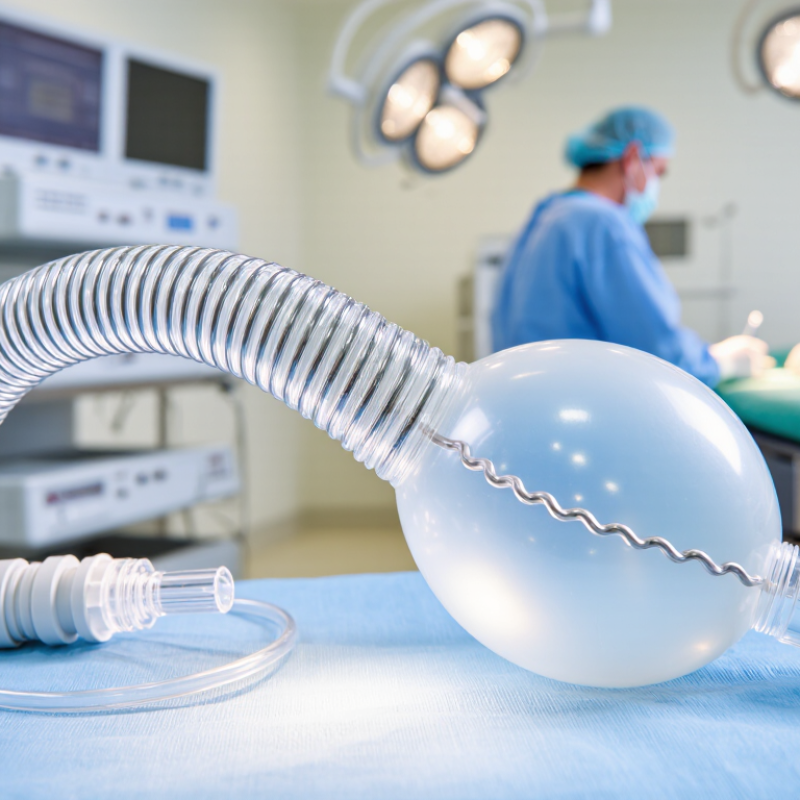
A reinforced endotracheal tube is a breathing tube with a flexible spiral support built into its wall. The spiral is commonly made from metal or another firm material. It helps the tube bend while resisting sharp kinks that could restrict airflow. The tube’s tip sits in the trachea, while its connector joins to a breathing circuit or ventilator. Many designs also have an inflatable cuff near the tip to help create a seal.
It is easy to overread the word “reinforced.” The tube is not crushproof, and its internal support cannot guarantee an open airway. Pressure, biting, or a tight bend may still affect airflow. That distinction matters. Clinicians may consider this type of tube when positioning or the route to the airway makes kinking a concern, such as during some head and neck procedures. The choice depends on the patient, procedure, and airway plan. Placement and ongoing checks remain essential, because a flexible tube can still shift or become obstructed. A coil helps, but it does not replace careful monitoring.
A reinforced endotracheal tube is a flexible breathing tube with a spiral reinforcement embedded in its wall. The design is intended to help the tube resist kinking when bent; it does not guarantee against obstruction or replace appropriate placement and monitoring.
How to read this chart: Each equal-height bar represents one commonly described design-related advantage, not a measured clinical outcome or a ranking. Suitability depends on the patient, procedure, and clinician’s judgment.
China Top 10 Reinforced Endotracheal Tube Benefits
A reinforced endotracheal tube contains a spiral support within its wall. This structure helps resist kinking when the tube bends around the mouth or follows a patient’s changing head position. The benefit is practical: a kinked tube can restrict airflow, while a flexible, supported tube may help maintain a more open passage during positioning or certain procedures. It does not prevent every obstruction. Secretions, biting, or external pressure can still affect airflow.
Stability depends on more than the tube itself. Secure fixation, careful positioning, and regular checks remain essential. The American Association for Respiratory Care’s 2024 patient-ventilator assessment guideline recommends maintaining endotracheal tube cuff pressure at 20–30 cm H₂O. This range helps support an appropriate seal; it is not a measure of reinforcement strength. Small detail. Big consequence. A reinforced shaft cannot compensate for a poorly managed cuff or misplaced tube.
For clinicians, the tube’s flexibility can be useful when access is awkward or the head and neck must be repositioned. Yet flexibility has trade-offs: handling and placement still require attention, and performance varies by design and patient. It is tempting to treat reinforcement as a guarantee of airway stability. It isn’t. The real value lies in reducing one mechanical risk while the care team continues to monitor tube position, airflow, and cuff pressure.
| No. | Potential benefit | How the reinforced structure helps | Practical context |
|---|---|---|---|
| 1 | Greater resistance to kinking | A helical reinforcement embedded in the tube wall helps the lumen resist bending-related collapse. | May be useful when the tube must follow a curved route, while correct positioning and monitoring remain essential. |
| 2 | Improved lumen patency in flexed configurations | The coil helps support the tube wall when it is curved, reducing the chance that a bend alone will narrow the airway passage. | Patency should still be assessed clinically; secretions, biting, or external compression can obstruct a tube. |
| 3 | Flexibility for routing around the face or operative field | The flexible shaft can be shaped to accommodate some positioning and access requirements without relying on a rigid tube body. | Route selection depends on the procedure, patient anatomy, and clinician judgment. |
| 4 | Potentially less kinking during head or neck repositioning | Reinforcement can help the tube resist sharp bends as its path changes with positioning. | Repositioning can still move or dislodge an endotracheal tube; position should be reassessed after relevant movement. |
| 5 | Support for selected non-standard tube routes | Its flexible, kink-resistant design can help maintain a patent passage when the tube is routed along a curved path. | Oral or nasal use and the appropriate tube configuration depend on the specific device labeling and clinical plan. |
| 6 | Reduced dependence on a straight tube path | The embedded coil supports the wall while allowing the shaft to bend, which can help accommodate anatomical or procedural routing needs. | The tube should not be bent beyond its intended use or forced into a route that causes resistance or deformation. |
| 7 | Potentially more consistent airflow through bends | By helping limit bend-related lumen collapse, reinforcement may support airflow when the tube is curved. | Airflow also depends on tube size, position, secretions, and circuit conditions; monitor ventilation rather than assuming patency. |
| 8 | Useful option when external access is constrained | The flexible shaft can be routed to suit some procedures where a conventional straight tube may be less convenient. | Choice of tube type should account for access, fixation, airway anatomy, and the procedure's requirements. |
| 9 | Support for maintaining tube shape during handling | The reinforcing helix helps the shaft retain an open lumen as it is flexed during placement and routing. | Inspect the device and follow its instructions for use; reinforcement does not make the tube immune to damage. |
| 10 | Can complement airway-stability measures | Kink resistance can help preserve the tube lumen, supporting one aspect of airway function. | It does not secure the tube in the trachea or prevent displacement; appropriate fixation and ongoing clinical checks are still required. |
Note: Reinforced endotracheal tubes are not suitable for every patient or procedure. Selection, placement, fixation, and monitoring should be performed by qualified healthcare professionals in accordance with the device instructions and clinical requirements.
A reinforced endotracheal tube has a spiral support embedded in its wall. This structure helps the tube resist kinking when it bends around the face or neck. In procedures where the airway must follow a curved route, that flexibility can help maintain a clear passage for ventilation. Small movements matter.
The tube may be useful during selected head, neck, or prone procedures, where positioning and nearby equipment can place pressure on the airway. Its flexible shaft can make routing easier, while clinicians still secure it and check its position. They monitor breathing, tube depth, and cuff pressure throughout care. The design is helpful, not magic.
Reinforcement does not prevent every blockage or displacement. Biting, secretions, or an unfavourable bend can still compromise airflow, so careful assessment remains essential. Teams choose tube type and size based on the patient, procedure, and airway plan. A detail worth remembering: flexibility can also make handling less familiar, and that deserves practice rather than assumption.
A reinforced endotracheal tube contains a flexible spiral support that helps resist kinking. Clinicians may consider it during prone surgery, head-and-neck procedures, or operations where neck movement could bend a standard tube. It can be useful when access to the airway will become limited.
But it is not automatically the safer choice for every patient. The UK’s Fourth National Audit Project (NAP4) recorded 184 major airway complications across intensive care, emergency departments, and wards. Those figures concern airway management broadly, not reinforced tubes specifically; they underline why tube selection and monitoring matter.
Patient factors guide the decision. Check the planned position, airway anatomy, expected procedure length, and whether the tube could be compressed or bitten. Confirm placement after positioning, and reassess if ventilation changes.
Fit matters. A reinforced tube may still obstruct, dislodge, or suffer damage; its flexible structure does not remove these risks. The American Association for Respiratory Care recommends maintaining adult endotracheal cuff pressure at 20–30 cm H₂O. Measure it with a manometer rather than relying on touch.
Not risk-free. In practice, individual anatomy and the care setting may matter more than the tube’s design, and that judgment deserves regular review.
Choosing a reinforced endotracheal tube starts with the clinical situation, not a feature list. Its flexible spiral reinforcement can help resist kinking when the tube must bend around the face or neck. Check the intended patient group, tube size, cuff type, connector, and available length. The fit and airway plan should be assessed by a qualified clinician. One detail is easy to overlook: reinforcement does not prevent every obstruction or placement problem.
Tips: Confirm that the tube’s labeling and instructions match the intended use. Ask for product traceability and quality documents, and check applicable Chinese medical-device requirements with the supplier. Inspect the packaging and tube before use. No shortcuts here.
Compare construction and handling under realistic conditions. A smooth surface and clearly marked depth graduations can make placement checks easier. The pilot balloon and cuff should be examined for reliable inflation and deflation, following the manufacturer’s instructions. Discuss compatibility with ventilation equipment and the care setting. For procurement in China, clarify storage conditions, delivery controls, and after-sales support. A lower price may seem attractive, but documentation and consistent supply deserve equal attention. The best choice depends on the patient, procedure, and trained clinical judgment.
It has a flexible spiral support inside its wall. This support helps resist kinking when the tube bends.
It may help keep the tube passage open during bending or changes in head position. It cannot prevent every blockage.
It may suit prone surgery, head-and-neck procedures, or situations with limited airway access. Fit still matters.
No. Secretions, biting, pressure, displacement, or damage can still affect airflow. Not risk-free.
Confirm tube placement and reassess airflow, especially if ventilation changes. A quick check matters.
It gives a range of 20–30 cm H₂O. Use a manometer, not touch alone.
No. Cuff pressure supports an appropriate seal; it does not measure shaft reinforcement. Easy to confuse.
Consider airway anatomy, planned position, procedure length, and possible compression or biting. The design is only part of the decision.
No. Secure fixation, careful positioning, and regular monitoring remain essential. The promise can sound bigger than it is.
A reinforced endotracheal tube is designed with a flexible support structure embedded in its wall, helping it resist kinking while remaining adaptable to patient positioning. This design can contribute to airway stability during procedures where the head or neck may move, or where access to the airway is limited. What are the benefits of reinforced endotracheal tubes? Potential advantages include improved resistance to bending, more consistent airflow, and greater flexibility in placement compared with standard tubes. These features may be useful in selected surgical and critical-care situations, though suitability depends on the patient and clinical needs.
Choosing a tube in China involves considering its size, construction, cuff design, intended use, and compatibility with the care setting. Clinicians should also assess patient anatomy, expected positioning, ventilation requirements, and the need for secure fixation. Appropriate selection and placement by trained professionals are important for supporting effective airway management and reducing avoidable complications.

Mainline Medical