China Top Anesthesia Circuit Bacterial Filters Why Needed?

Time:2026-11-09 Author:Mason
0%

Why do anesthesia circuits require bacterial filters? The answer begins with a simple concern: breathing circuits connect patients to equipment that handles respiratory gases. A filter can reduce the passage of microorganisms and droplets through selected parts of the circuit. This matters in operating rooms, where equipment is used repeatedly and infection prevention depends on several safeguards working together.

Anesthesia equipment specialist Dr. Jeffrey Feldman has discussed equipment safety and the importance of managing breathing systems appropriately. A concise paraphrase of that principle is: “A filter is one layer of protection, not a substitute for sound circuit handling.” Filters do not make a circuit sterile, and they cannot replace hand hygiene, cleaning, or correct equipment setup. That distinction is easy to overlook.

For hospitals evaluating China-based anesthesia circuit bacterial filters, product details deserve close attention. Check the intended placement, filtration performance, connection compatibility, and resistance to airflow. Moisture buildup and added dead space may also matter, especially for smaller patients. Follow the device labeling and the anesthesia workstation manufacturer’s instructions; do not assume every filter fits every circuit. A lower purchase price alone tells little about clinical suitability.

The practical goal is measured protection, not a promise of zero risk. A well-selected filter can support infection-control procedures, but poor handling can undermine that benefit. This is not always a tidy calculation. Teams should review device specifications and local protocols before adoption, then reassess how the filter performs in real clinical use.
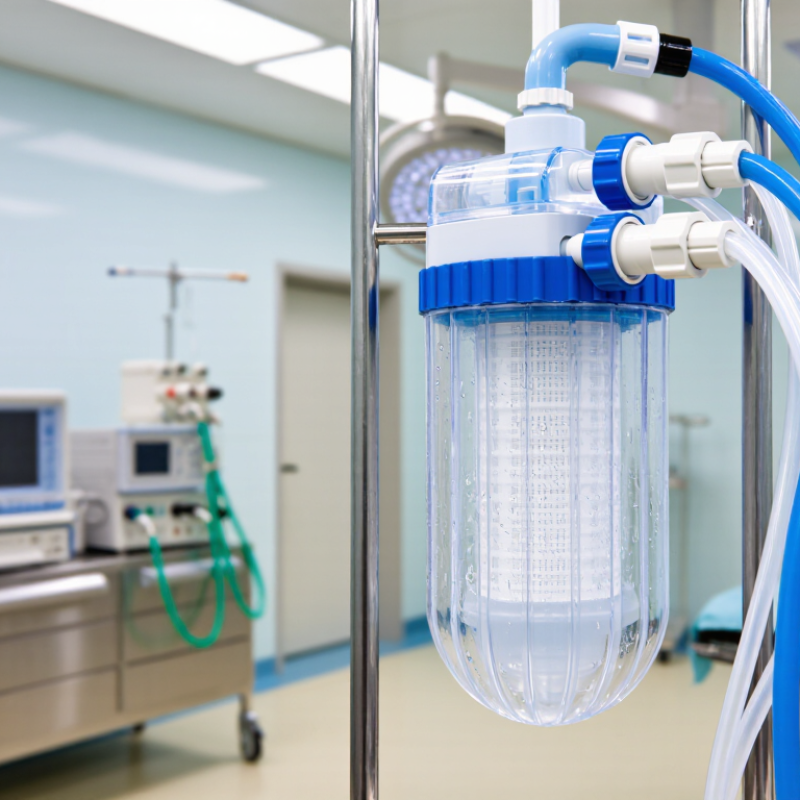
China Top Anesthesia Circuit Bacterial Filters Why Needed?

What Anesthesia Circuit Bacterial Filters Are

An anesthesia circuit bacterial filter is a porous barrier placed between the patient’s airway connection and the breathing circuit. It captures microorganisms carried in exhaled droplets and aerosols, helping limit contamination of circuit components. Some designs also act as heat-and-moisture exchangers, but filtration and humidification are separate functions. Not a sterilizer. The filter does not make contaminated equipment safe or replace routine cleaning and circuit-management procedures.

The World Health Organization’s 2022 global infection-prevention report estimates that 7 in 100 patients in high-income acute-care hospitals acquire at least one healthcare-associated infection; the estimate is 15 in 100 in low- and middle-income settings. These figures describe overall hospital risk, not infections caused by anesthesia circuits. That distinction matters. ISO 23328-1 describes a laboratory method for measuring bacterial filtration efficiency in breathing-system filters. A laboratory result cannot guarantee zero exposure in a working theatre. Staff should also consider fit, airflow resistance, moisture buildup, and the filter’s intended use. A loose connection or wet filter can undermine performance, so checking the setup remains important.

How Filters Limit Microbial Spread Through Anesthesia Circuits

An anesthesia circuit carries gas back and forth with every breath. Exhaled moisture can leave droplets on the Y-piece, tubing, and nearby components. A bacterial filter placed between the patient and circuit helps trap microorganisms before they travel deeper into the system. It can also reduce contamination during handling, when wet connectors are easy to overlook.

Performance figures need context. ISO 23328-1:2003 describes a laboratory test method for breathing-system filters, including bacterial filtration efficiency. A reported efficiency of 99.99% means roughly one particle in 10,000 passes under the stated test conditions; it does not promise the same result in every clinical setup. Fit, leaks, moisture, and correct placement matter. Not magic. A saturated or poorly seated filter may add resistance or fail to protect as intended, so staff should follow the device instructions and local infection-control procedures. In practice, inspect the filter and connections between cases, and treat visible condensate as a cue to reassess the circuit—not as proof that the filter has solved everything.

Why Anesthesia Circuit Filters Matter

Approximate size ranges of viruses and bacteria illustrate why filtration is important in limiting microbial transfer through anesthesia circuits.

An appropriately selected and correctly positioned filter can help reduce microbial contamination of the anesthesia circuit and lower the risk of cross-contamination. Particle sizes vary among organisms, and capture performance depends on the specific filter; follow its instructions for use and replacement.

Clinical Risks Reduced by Bacterial Filtration

A bacterial filter in an anesthesia circuit can reduce the movement of microorganisms between the patient and breathing equipment. During ventilation, exhaled moisture and secretions may carry microbes into circuit components. A correctly selected filter helps limit this contamination and may lower the risk of transmission between patients when equipment is reused according to approved procedures.

Small component. Real consequences. In practice, staff should check that the filter is correctly placed, securely connected, and suitable for the intended circuit. A loose fit, damaged housing, or excessive moisture can undermine performance. Filters also do not remove every infection risk. They cannot replace equipment reprocessing, hand hygiene, or careful circuit handling.

There is a trade-off worth watching. Added resistance or dead space may affect ventilation, especially in small patients or when the filter is not appropriate for the setup. Clinicians should monitor airway pressures and ventilation, and follow the filter’s instructions for use and facility protocols. A filter can reduce one pathway of contamination, but it is not a magic barrier. In a busy operating room, that distinction is easy to overlook.

Key Factors in Selecting and Using Anesthesia Filters

Choosing an anesthesia circuit bacterial filter starts with the patient and the breathing system, not the package label alone. Check that the filter is intended for the planned position and compatible with the circuit. A filter near the patient may affect dead space, while added resistance can matter for patients with limited respiratory reserve. Small details matter.

Review the manufacturer’s stated filtration performance, airflow resistance, moisture handling, and any humidification function. Then confirm that the device fits securely; a loose connection can undermine protection. During use, watch for visible moisture, secretions, damage, or an unexpected rise in resistance, and follow the device instructions and local clinical protocol for replacement. A quick visual check helps, but it cannot confirm filtration performance. Not always obvious.

Filters do not replace hand hygiene, circuit handling procedures, or equipment cleaning. Staff should also avoid treating every filter as interchangeable: design and intended use differ. In practice, selection can feel routine, and that is where assumptions creep in. If the patient’s needs or circuit setup make the choice unclear, consult the anesthesia team and the device documentation before use.

China’s Anesthesia Filter Market and Quality Standards

China’s anesthesia filter market is shaped by hospital procurement, clinical needs, and medical-device quality requirements. Buyers should look beyond a high filtration-efficiency figure. Pressure drop, internal volume, leakage, connector fit, and moisture handling can all affect performance in an anesthesia breathing circuit.

Details matter. In China, manufacturers and suppliers need to meet the applicable medical-device registration, testing, labeling, and quality-management requirements for their product category. Standards such as ISO 23328 provide methods for evaluating breathing-system filters, but a test result alone does not guarantee suitability for every circuit or patient. Verify the intended use, test conditions, and compatibility information before procurement.

In practice, staff may notice a poor fit before they notice a specification gap. A loose connection, rising resistance, or unclear packaging instructions can complicate routine setup. Yet paperwork can look cleaner than real use. That is worth remembering. Hospitals should review test reports and traceability records, then assess filters within their own equipment and workflows. Requirements can vary by device classification and intended use, so qualified regulatory and clinical teams should confirm what applies.

FAQS

What does a bacterial filter do in an anesthesia circuit?

It helps limit microorganism movement between a patient and breathing equipment. It reduces one contamination pathway, not every infection risk.

Where should the filter be placed?

Use a position intended for that filter and compatible with the circuit. Check the device instructions before connecting it.

What should staff check before use?

Confirm the filter is secure and undamaged. Look for loose fittings, cracked housing, or visible moisture.

Can a filter replace equipment cleaning and hand hygiene?

No. Continue equipment reprocessing, hand hygiene, and careful circuit handling. The filter is not a magic barrier.

Can a filter affect ventilation?

Yes. Added resistance or dead space may matter, especially for small patients or those with limited respiratory reserve.

What should clinicians monitor during use?

Watch airway pressures and ventilation. Also check for secretions, moisture, damage, or an unexpected increase in resistance.

Are all anesthesia filters interchangeable?

No. Designs and intended uses differ. Check filtration performance, airflow resistance, moisture handling, and circuit compatibility.

When should a filter be replaced?

Follow its instructions and local clinical protocol. Visible moisture can be a warning, but a quick visual check cannot confirm performance. Easy to miss.

Conclusion

Anesthesia circuit bacterial filters are designed to trap microorganisms and particles as gases move through the breathing system. Why do anesthesia circuits require bacterial filters? Because contaminated equipment or exhaled moisture may contribute to microbial transfer between patients or into parts of the circuit. Proper filtration can help reduce this risk and support infection prevention, while complementing—not replacing—cleaning, disinfection, and other clinical precautions.

Choosing and using a filter requires attention to its intended position, compatibility with the circuit, filtration performance, airflow resistance, moisture handling, and replacement instructions. Clinical teams should follow the device’s instructions and established facility procedures. In China, the anesthesia filter market includes products with differing specifications, so buyers should review applicable quality requirements, product documentation, and performance evidence. Careful selection and correct use help maintain effective ventilation while supporting safer anesthesia practice.

Mason

Mason

Mason is a seasoned marketing professional with a deep expertise in the company's offerings and a passion for driving brand awareness. With a strong background in digital marketing strategies, he has an innate ability to connect with diverse audiences and effectively communicate product benefits.......