Mainline Medical
The Strategic Landscape of Custom OEM Syringe & Device Manufacturing
An authoritative analysis of supply chain architecture, precision medical polymers, and international regulatory integration.
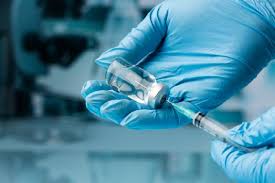
In modern clinical environments, safety, ergonomics, and material purity represent the baseline of clinical efficacy. As global healthcare infrastructure expands, medical procurement officers and clinical engineering directors require more than just catalog products. They seek tailored, highly specialized Custom OEM Syringes and medical fluid delivery setups capable of meeting specific tolerances, complex biocompatibility profiles, and tight chemical compatibility matrices. Choosing a dedicated, ISO-certified OEM syringe factory ensures that custom designs transition seamlessly from initial computer-aided models (CAD) to high-volume injection molding.
Polymer Customization
Leveraging premium Medical Grade Polypropylene (PP), COP, and COC for complex fluid compatibilities, preventing chemical degradation and ensuring structural stability.
Sterility Validation
Robust implementation of validated Ethylene Oxide (EO) and Gamma Irradiation cycles in compliance with ISO 11135 and ISO 11137 international parameters.
Ultra-Low Dead Space
Engineering minimal dead space (LDS) plunger configurations to maximize dose recovery of high-value biologics, vaccine arrays, and aesthetic solutions.
Global Commercial & Industrial Realities
The commercial market for syringes has evolved beyond conventional mass production. Current market intelligence demonstrates a massive shift toward pre-filled syringe (PFS) platforms and customized safety needles. In fields such as clinical oncology, immunology, and cosmetic therapies, standard off-the-shelf syringes fail to deliver the required chemical stability or precise dosage graduation. Systemic requirements, such as UV-blocking barrels, specialized elastomeric formulations for plunger tips (such as fluorocarbon-coated butyl rubbers), and customized high-viscosity needle gauges, drive the necessity of establishing direct relationships with verified OEM/ODM medical factories.
Furthermore, modern healthcare initiatives prioritize clinical waste minimization and mechanical safety features. Single-use technologies incorporating automatic retracting mechanisms or passive needle guards demand complex multi-cavity injection molds and automated assembly tracks. This shift makes it imperative for clinical buyers to verify that their manufacturing partners maintain strong global supply chains, resilient material reserves, and robust logistical pipelines.